
An even ground that lets the carving speak
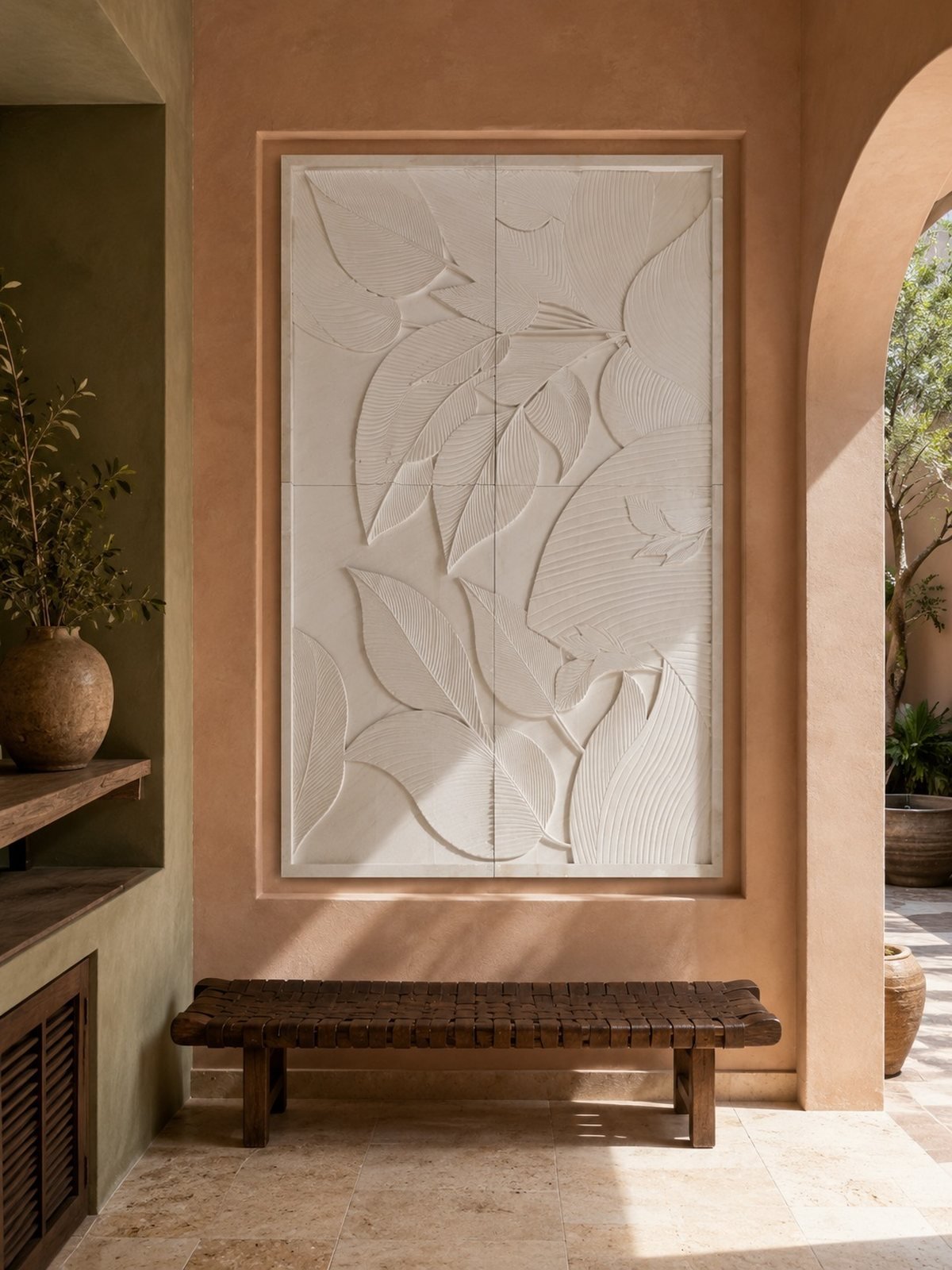
Limestone carving for deep relief across a whole wall.
Limestone is chosen when the carving should carry the wall rather than the stone's own veining. Its fine, uniform body takes deep relief evenly and stays consistent from block to block, which is exactly what a joined, multi-panel composition needs.
01Made to orderDrawings and references developed for stone.
02Cut and hand-finishedMachined geometry resolved at the carving bench.
03Coordinated supplyApproval, numbering and packing planned for the work.
Limestone work already carved
Stonegraph's photographed limestone includes a deep-relief Buddha in bloom on a single panel, a four-panel banana leaf composition in cream limestone, a backlit contour relief wall, a beaded-contour dune relief made as a bedroom feature wall, a framed Vishnu with a carved surround and lotus base, and a free-standing temple chariot.
Across those pieces the stone does the same thing: it holds a calm, neutral field so shadow and depth read clearly, whether the relief is botanical, abstract, devotional or architectural.
- Large-format relief murals
- Bedroom headboards and lobby feature walls
- Backlit limestone relief
- Devotional relief panels
- Free-standing carved forms
Where limestone belongs, and where it does not
Limestone is a sedimentary calcium carbonate stone. Like marble it reacts with acids, so it suits interiors and sheltered positions better than exposed, wet exterior faces. Spills, cleaning products and damp can stain it; a finish and maintenance plan should be agreed with the designer.
For exposed outdoor carving, Rajasthan sandstone or granite is usually the more responsible choice. The stone guide sets the five carving stones side by side so the decision can be made before a design is fixed.
Feature walls, headboards and light
A limestone wall is normally divided into panels where the composition can absorb the joints, dry-assembled in Jaipur and numbered for installation. Panel weight, backing and fixing zones are coordinated with the installer before carving.
Some limestones pass light when carved thin enough, which makes a backlit relief possible; the result is proved on a sample under the project's lighting rather than promised from a drawing. Send the wall size, reference or drawing, lighting intent and delivery location to begin.
Practical answers
Questions before a stone brief.
- 01Is limestone good for carving?
- Yes. Its fine, uniform body carves evenly and suits deep relief over large areas, and its consistency from block to block keeps joints between panels from showing a colour change.
- 02Can limestone carving be used outdoors?
- It is best in interiors and sheltered positions because it reacts with acidic rain and stains. For exposed exterior work, sandstone or granite is usually recommended.
- 03What is the difference between limestone and marble?
- Marble is limestone that has been metamorphosed by heat and pressure, so it is denser, takes a high polish and usually shows veining. Limestone is softer in tone and more uniform, with little dramatic veining.
- 04Can a limestone relief be backlit?
- Some limestones transmit light when carved thin. Stonegraph has made a backlit limestone contour wall; the effect is confirmed on a sample under the actual lighting before production.
Begin with what you have
Send the drawing, dimensions or reference.
Include the setting, preferred stone if known, quantity, delivery location and required date. The workshop can then respond with the missing technical questions.
Stonework directory
Find the right stonework brief.
Material, method and application guides from the Jaipur workshop.