
Vessels cut from one block
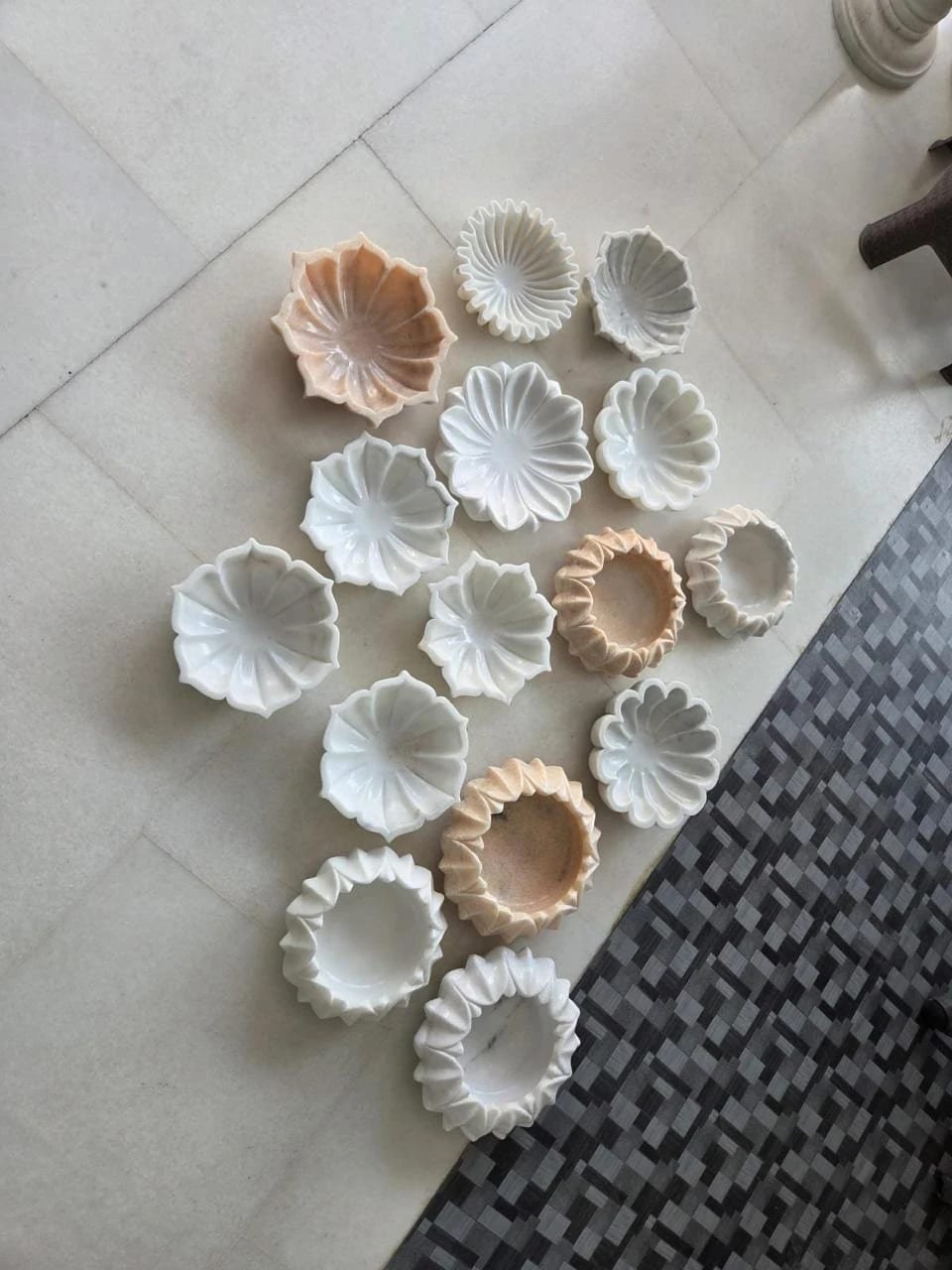
Stone planters and urli bowls, turned and carved from solid stone.
A carved vessel is judged by its outline but lives by its detail: wall thickness, drainage, what it will hold and how heavy it becomes when full. Stonegraph designs the practical interior before the ornament on the outside.
01Made to orderDrawings and references developed for stone.
02Cut and hand-finishedMachined geometry resolved at the carving bench.
03Coordinated supplyApproval, numbering and packing planned for the work.
What the workshop has already made
The collection includes petal-cut urli in white and pink marble, hand-turned lotus bowls in marble and mixed stone made in a range of sizes, white marble cylinder planters turned from a solid block, a fluted sandstone planter standing on a lotus foot, and pierced beige sandstone cylinders with jali or geometric fretwork that work as planters or stands. A deep-fluted Carrara marble cylinder is used as an umbrella stand.
An urli is a wide, shallow round vessel used in Indian homes and temples to float flowers and lamps on water. In stone it becomes a permanent centrepiece for an entrance, a courtyard or a hotel lobby.
- Marble urli and petal-cut lotus bowls
- Turned marble cylinder planters
- Fluted and column planters on carved feet
- Pierced jali cylinders and fretwork stands
- Umbrella and walking-stick stands
A planter has to survive its soil
Outdoor planters need a drainage hole, a wall thick enough for wet soil pressure and, ideally, feet that lift the base off paving so water can escape. Wet soil makes a planter far heavier than its empty weight, which matters for balconies, roofs and anyone moving it later.
An urli is the opposite problem: it must hold water. Dense marble holds water well; a more porous stone can darken or show mineral marks and may call for a sealer or a liner. The vessel's depth, rim and interior finish are chosen for flowers and floating lamps rather than for planting.
Sets, sizes and supply
Bowls and planters are often wanted as graded sets or as a match to other stone on the site. Profiles and motifs can be coordinated with parasol bases, gate pillars, jali and paving so a garden or lobby reads as one scheme.
There is no fixed minimum, and single pieces can be shipped. Send the intended use, approximate size, indoor or outdoor position, preferred stone and delivery location. Each vessel is packed to its weight and fragile rim; installation stays with the client.
Practical answers
Questions before a stone brief.
- 01What is an urli?
- An urli is a wide, shallow round vessel traditionally used in Indian homes and temples to float flowers and lamps on water. Stonegraph carves urli in marble and mixed stone in a range of sizes.
- 02Can a stone urli hold water permanently?
- Dense marble holds water well. More porous stones can darken or show mineral marks and may need a sealer or a liner, so the stone is chosen with the setting in mind.
- 03Do outdoor stone planters need drainage holes?
- Yes. Outdoor planters should drain, ideally raised on feet so water can leave the base. Indoor planters can use a liner instead.
- 04Can planters and bowls be made as a matching set?
- Yes. Profiles, motifs and sizes can be graded as a set or matched to parasol bases, pillars and other stone on the project.
- 05Are single bowls or planters shipped abroad?
- Yes. There is no fixed minimum; freight practicality depends on size, weight and destination, and each piece is packed to protect its rim.
Begin with what you have
Send the drawing, dimensions or reference.
Include the setting, preferred stone if known, quantity, delivery location and required date. The workshop can then respond with the missing technical questions.
Stonework directory
Find the right stonework brief.
Material, method and application guides from the Jaipur workshop.